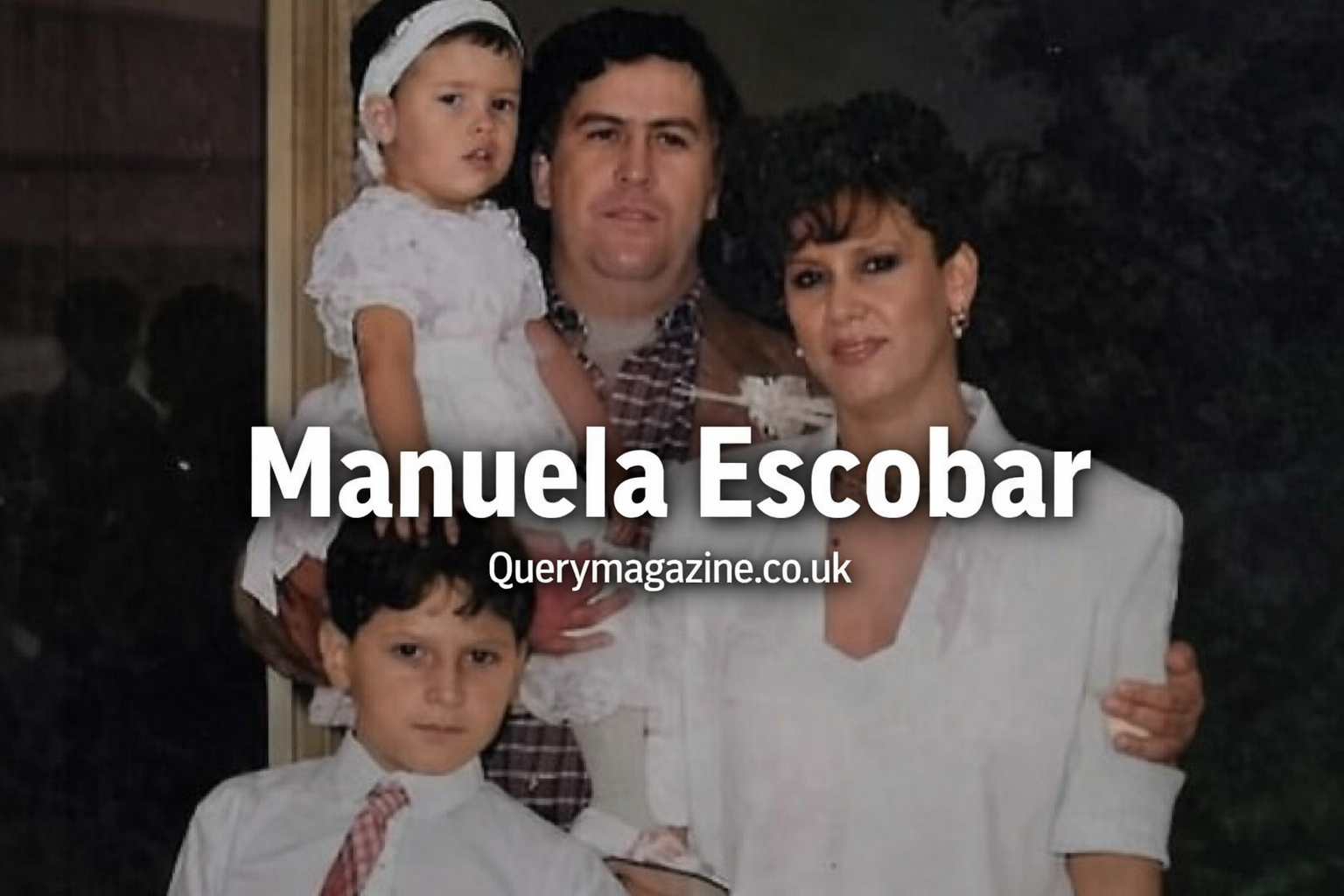
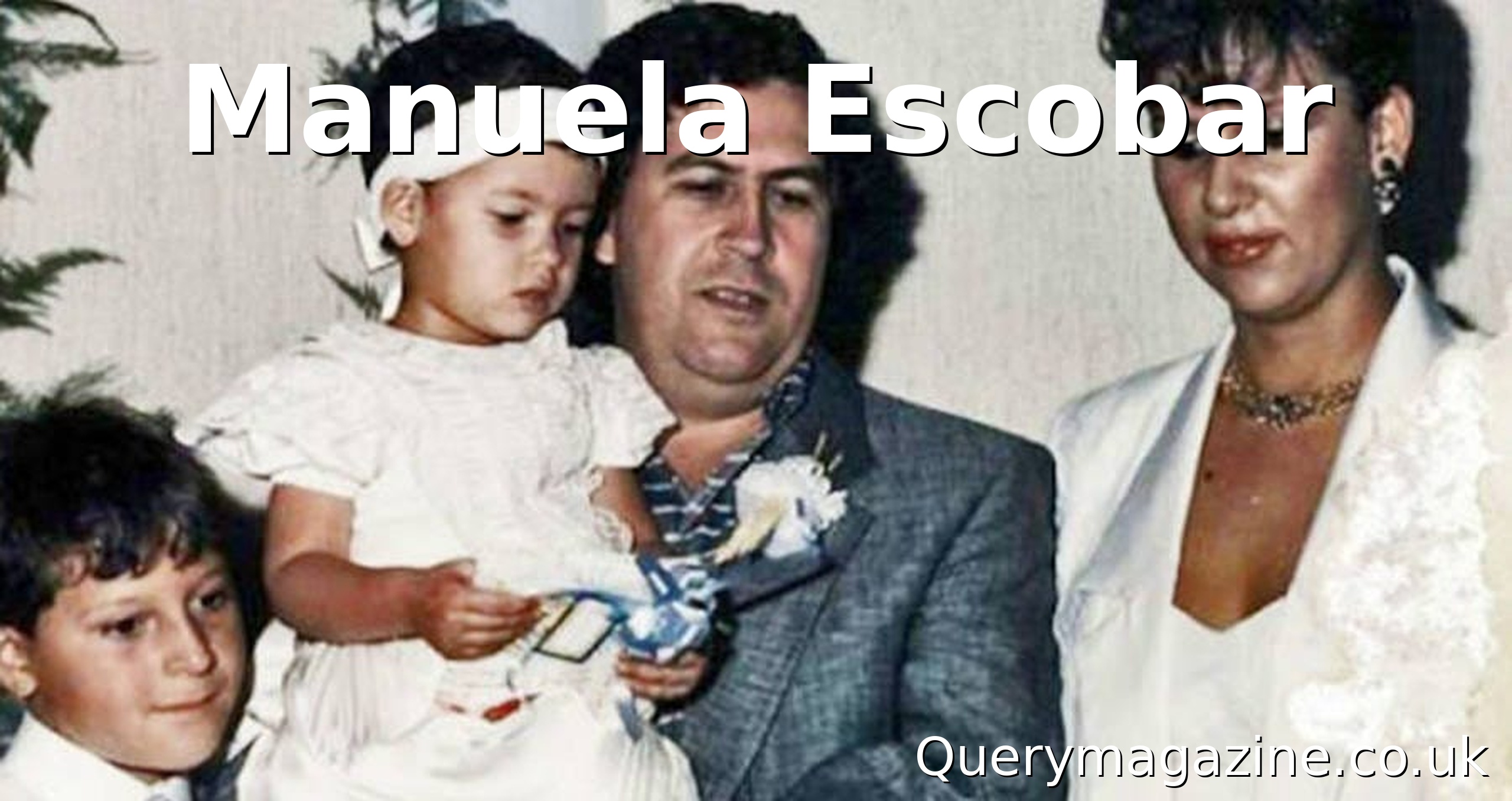
Manuela Escobar has long been one of the most mysterious figures connected to Colombia’s most infamous drug lord, Pablo Escobar. While her father’s legacy is notorious and widely covered in media, Manuela has lived a life shrouded in privacy, rarely appearing in public or giving interviews. Born into wealth and danger, she witnessed extremes few can imagine — from unimaginable luxury to the trauma of violence and exile.
In this comprehensive biography, we explore her childhood, family legacy, conflicted past, and life today — offering the most complete picture available.
1. Introduction
Who is Manuela Escobar?
Manuela Escobar was born on May 25, 1984 in Colombia, as the daughter of Pablo Escobar, leader of the Medellín Cartel, and María Victoria Henao. While her father was one of the most powerful and wealthy criminals of the 20th century, Manuela’s life has been shaped by the fallout of his actions — violence, constant danger, and an eventual choice for anonymity.
Her story is a dramatic blend of fortune and trauma, and remains one of the most compelling yet least public narratives connected to the Escobar family.
2. Early Life and Family Background
Birth and Family
Manuela Escobar was born into the world of Pablo Escobar’s drug empire. As his only daughter, she was adored by her father and lived in the lap of luxury during her earliest years.
She had one sibling — an older brother named Juan Pablo Escobar Henao, who later changed his name to Sebastián Marroquín Santos.
Childhood in Luxury and Danger
Despite the privilege that came with her father’s wealth, Manuela’s childhood was far from a normal life. Escobar’s drug cartel dominated the cocaine trade in the 1980s and early 1990s, bringing with it violence, threats, and instability that affected everyone close to him.
Born into this world, Manuela was exposed to a life of opulence — but also ever‑present danger. She grew up surrounded by armed guards and lavish homes, while also living under threat from Escobar’s many enemies.
3. The Shadow of Pablo Escobar’s Legacy
Growing Up Amid Violence
Living as the daughter of one of the planet’s most feared criminals inevitably left psychological marks. A particularly traumatic event during her childhood was the 1988 bombing of the Monaco building in Medellín, where members of a rival cartel targeted Escobar’s family. Manuela reportedly lost hearing in one ear as a result of the attack.
Such violence underscored that even her father’s protection could not insulate her fully from the dangers of his enemies.
Father’s Death and Aftermath
On December 2, 1993, Pablo Escobar was killed by Colombian security forces after a long pursuit. His death marked the end of his cartel’s dominance but dramatically altered his family’s life.
At the time, Manuela was just nine years old. With their patriarch gone, the family faced relentless danger from both authorities and rival criminals — forcing them to flee Colombia.
4. Life After Pablo Escobar
Fleeing Colombia and Identity Change
Following Pablo Escobar’s death, Manuela, her mother, and her brother embarked on a long journey across countries to escape the violent legacy tied to their name. Initially, they attempted to seek asylum in various nations, including Mozambique and Brazil, before finally arriving in Buenos Aires, Argentina.
To conceal their identities and avoid public scrutiny, each adopted a new name. Manuela became Juana Manuela Marroquín Santos.
This identity change was critical — not just as a safety measure, but as a way of distancing themselves from the ever‑present stigma of the Escobar name.
Growing Up in Exile
Life in Argentina marked a stark turn from the luxury she once knew. The family lived relatively quiet lives; however, when their true identities were revealed, it brought renewed challenges.
Her mother and brother faced legal troubles — charged with false documentation and money laundering in 1999 — but Manuela, being a minor, was not implicated.
ALSO READ ON: Damian Gabrielle: Entrepreneur, Stanford MBA, and Private Life of Olga Kurylenko’s Ex‑Husband
5. Personal Challenges and Mental Health
Trauma of Legacy
Manuela’s upbringing in a world of danger and unpredictability has influenced her emotional development. Besides the dangerous events she lived through as a child, reports suggest she experienced deep emotional distress, leading to psychological treatment and periods of depression.
Due in part to her family experiences and the trauma of displacement from Colombia, she sought to maintain a life distant from the public gaze.
Coping with Public Attention
Unlike her brother Sebastián — who has written books and participated in documentaries about their father’s life — Manuela has avoided public attention entirely. This choice reflects her commitment to privacy and her desire to build a life that isn’t defined by her father’s crimes.
6. Manuela Escobar as a Modern Public Figure
While many assumed she might eventually step into the public eye, that has never happened. There’s no verified social media presence, published interviews, or public speeches attributed to her.
She has not pursued any career in entertainment, politics, or public service — in sharp contrast to many other children of famous figures.
This complete avoidance of publicity has instead made her more intriguing to audiences and media, though she remains intensely private.
7. Charitable Work and Social Impact
While there are reports and rumors about Manuela’s interest in charitable work, there’s very little verified information about her involvement in specific initiatives. Some secondary sources suggest she may focus on helping victims of violence and crime — possibly influenced by her own experiences — but these are not confirmed by primary sources.
Because there is no public record of specific projects in her name, it’s more accurate to say that any charity involvement remains private and undocumented in mainstream sources.
8. Reflections on Identity and Legacy
Rejection of Her Father’s Shadow
Perhaps the most defining aspect of Manuela Escobar’s life is her effort to step away from her father’s legacy. She has deliberately avoided interviews, documentaries, and media exposure that discuss her family history.
This decision reflects her desire to live independently from the narrative that has dominated public perception of her identity.
Rather than embrace the notoriety that comes with being Pablo Escobar’s daughter, Manuela has chosen a life of anonymity and seclusion, suggesting a personal rejection of the world her father built.
9. Fun Facts and Lesser‑Known Details
Here are some lesser‑reported details that add depth to her story:
- Hearing Injury: Manuela reportedly suffered hearing damage as a child due to a bombing attack linked to cartel rivalries.
- Unique Position in Her Family: She’s recognized in various sources as the only Escobar family member with no criminal record — a stark contrast to her father, mother, and brother.
- Lives Entirely Privately: There is no public documentation of her academic or professional career — indicating a life lived outside the spotlight.
10. Future Outlook and Possibilities
Because Manuela does not seek public attention, her future remains uncertain to the outside world. Some possible directions include:
- Continuing to maintain a completely private life.
- Engaging in quiet charitable work far from media scrutiny.
- Focusing on personal development and family life.
Without first‑hand interviews or public engagement, much about her future is speculative rather than documented.
11. Frequently Asked Questions (FAQ)
Q: What happened to Manuela Escobar after her father’s death?
A: After Pablo Escobar was killed in 1993, Manuela and her family fled Colombia and eventually settled in Argentina under new identities to avoid danger and public exposure.
Q: Does she have any criminal record?
A: No — reports indicate that Manuela has never been accused of any crime, making her unique in her family in that regard.
Q: Is she involved in charity work?
A: There are reports suggesting possible interest in helping victims of violence or crime, but no verified public initiatives are documented.
Q: Does she live in Argentina?
A: Most reliable sources indicate that Manuela is living privately in Argentina under a new identity, though exact details are not public.
12. Conclusion
Manuela Escobar’s life is a story of contrasts — born into wealth and violence, yet choosing privacy and anonymity as an adult. Her journey moves beyond the notoriety of her father to reflect questions of identity, resilience, and self‑determination.
Unlike most figures connected to organized crime, Manuela has forged a life far from media attention or public scrutiny. This choice — while frustrating to curious audiences — underscores her most defining trait: a profound desire to escape the shadows of her past and chart her own path.
In a world obsessed with fame and sensational stories, her quiet life stands as a powerful testament to how one can quietly redefine legacy — not through public acclaim, but through personal peace.
ALSO READ ON: Joshua Russaw Biography: DJ Jahad’s Life, Music Career, Family & Net Worth