
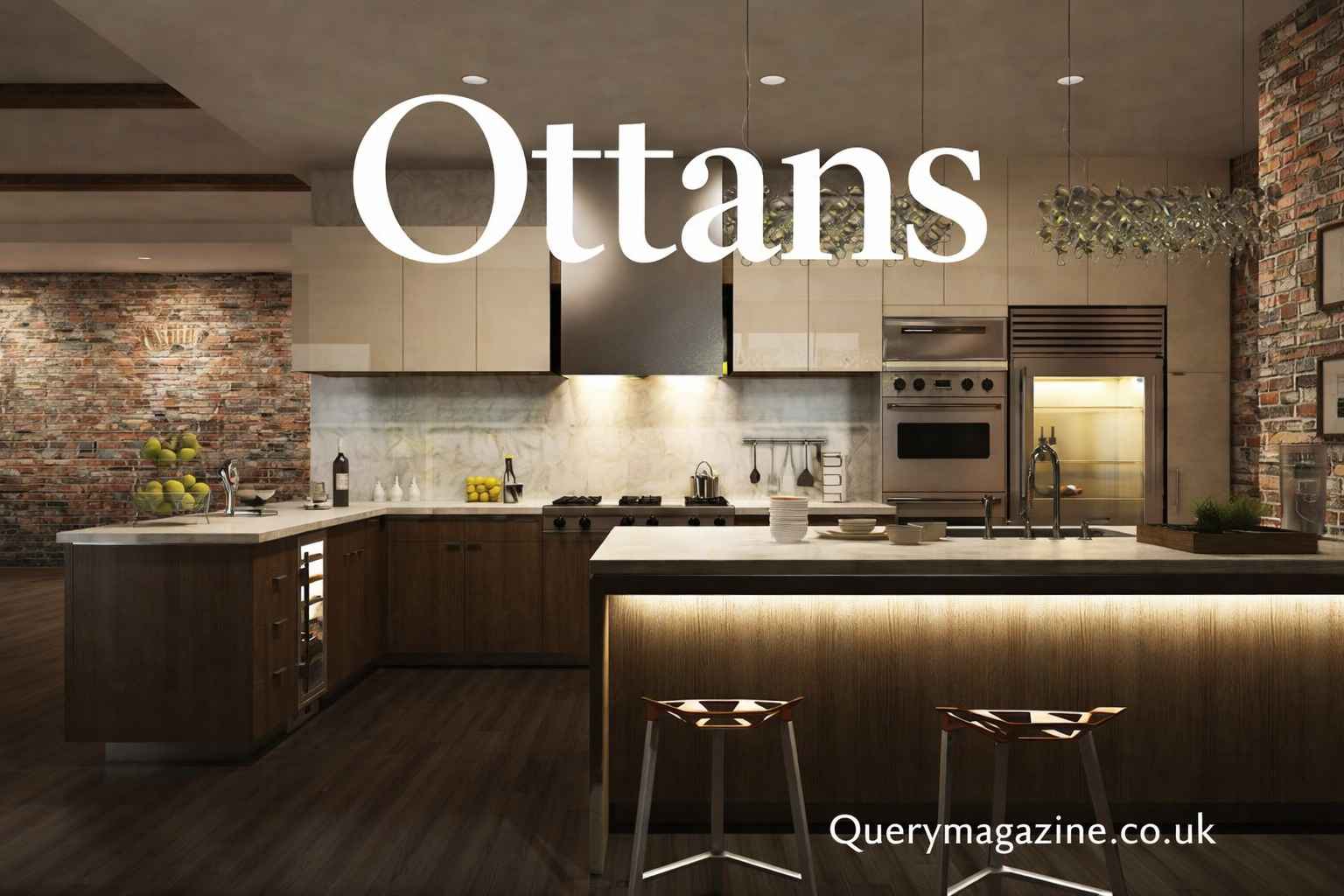
In a world grappling with climate change, waste accumulation, and dwindling natural resources, the materials we choose for building, decorating, and designing matter more than ever. Ottans — a groundbreaking bio‑composite material concept developed by Ottan Studio — is rapidly gaining recognition as a symbol of sustainable innovation in interior design, furniture, and architecture. It blends environmental responsibility with modern aesthetics, transforming organic waste into durable, design‑ready surfaces.
This exhaustive guide explores what Ottans are, how they’re made, their applications, environmental impact, and why they could define the next generation of sustainable materials.
1. Introduction
What Are Ottans? A Sustainable Design Revolution
“Ottans” refers to a suite of innovative bio‑composite materials created from upcycled food and agricultural waste, engineered for use in interior surfaces, furniture, paneling, and architectural elements. Unlike traditional synthetic boards, plastics, or stone laminates, Ottans transform discarded natural materials into visual assets with compelling textures and rich appearances.
The term is tightly associated with Ottan Studio, the London‑based and Turkey‑operating design collective that pioneered these materials. What began as a mission to repurpose organic waste has expanded into an entire design philosophy rooted in circular economy principles.
Why Ottans Matter in Today’s Eco‑Conscious World
Global awareness about sustainable living is at an all‑time high. From climate policy to consumer values, sustainability now influences how spaces are designed and built. Ottans emerge at the intersection of responsible sourcing, advanced material science, and aesthetic principle — making them especially relevant in industries where environmental impact and design quality must meet.
2. Origin & Philosophy
The Story Behind Ottans and Ottan Studio
Ottan Studio was founded with the mission to reimagine how materials are sourced and created. The idea, inspired by nature’s own cycles, was to harness the potential of organic waste — items traditionally destined for landfill — and turn them into valuable design resources.
Beginning with leaves, grass clippings, fruit peels, and other discarded organic matter, the founders developed techniques to clean, process, and bind these materials into stable, attractive composites. Years of research and development eventually made Ottans a reality.
Founding Vision: Turning Organic Waste into Design Solutions
The core ethos behind Ottans is built around the question:
“How can we use materials more sustainable than wood or stone derivatives in product design?”
This led to a circular mindset that sees waste as a resource, not a byproduct. Unlike conventional material production — which follows a linear extract‑make‑dispose model — Ottans’ approach reinserts organic waste back into the design cycle, minimizing ecological impact.
Ottans and the Circular Economy: Redefining Resource Use
Circular economy principles aim to eliminate waste and continually reuse resources. Ottans embodies this model by sourcing from renewable or discarded organic feedstocks and engineer these into high‑performance surfaces.
Rather than consuming forests or mining raw stone, Ottans recycles materials such as shell waste, expired cereals, and agricultural residues — promoting lower carbon emissions and reduced resource extraction.
Design Principles Driving Ottans Innovation
Ottans materials aren’t just sustainable; they are meant to be beautiful, durable, and meaningful. The philosophy prioritizes:
- Visual authenticity: natural textures and color variations inherent to original waste sources.
- Functional excellence: mechanical stability and versatility in manufacturing.
- Environmental responsibility: up to 85% upcycled content in some product lines.
3. Understanding Ottans Materials
What Are Ottans Bio‑Composite Materials?
At their core, Ottans are bio‑composite materials — engineered blends of organic waste particles bonded with eco‑friendly resins. These composites offer strength, tactile warmth, and aesthetic richness, enabling them to compete with mainstream construction and interior materials.
Typical feedstocks include:
- Eggshells
- Hazelnut and pistachio shells
- Expired rice and lentils
- Grass clippings, leaves, and plant residues
By preserving natural textures and colors, Ottans avoid artificial colorants entirely, letting the raw material narrative shine through.
How Ottans Materials Are Made: From Waste to Premium Surfaces
The process broadly follows these key steps:
- Collection & Preparation: Organic waste is gathered from food processors, farms, gardens, and retailers.
- Cleaning & Drying: Materials are cleaned, dried, and ground into fine particles.
- Mixing with Resins: The particles are combined with eco‑friendly binding resins.
- Molding & Pressing: The composite mix is pressed under controlled conditions to form stable panels or blocks.
- Curing & Finishing: Final machining, sanding, or finishing is applied to meet design requirements.
These materials can be CNC machined, drilled, and laser cut — making them compatible with modern fabrication techniques.
Core Product Lines of Ottans Materials
Ottan Studio categorizes its materials into several distinct lines, each with unique characteristics and applications:
Core Line
The flagship range includes formulations such as:
- Eggy — made primarily from eggshells.
- Nutty and Nuts — featuring hazelnut and pistachio shells.
- Moon — a hybrid surface with refined tones.
These materials are optimized for industry‑scale production with consistent mechanical and aesthetic performance.
Core Seasonal Line
Crafted from seasonal waste like grass, leaves, and expired lentils, these materials vary subtly between batches — celebrating natural variability and offering upcycled content between 50–72%.
Translucent Line
Made from upcycled rice and lentils, this line enables light‑transmitting panels perfect for feature walls and artistic installations, reflecting Ottans’ creative potential.
Acoustic Line
Engineered to absorb sound, these lightweight panels are ideal for offices, retail spaces, or hospitality interiors where noise control matters.
Stone Line
Designed to echo the look and feel of natural stone while using up to 85% upcycled waste, this line delivers tactile depth and durability without the environmental toll of quarrying.
4. Applications of Ottans
Residential Interior Applications
Ottans materials are increasingly used in homes for:
- Wall paneling
- Kitchen surfaces
- Cabinet facades
- Shelving and decorative features
Their organic aesthetic and natural warmth foster inviting spaces that feel both modern and grounded.
Commercial Spaces
Architects and interior designers are adopting Ottans in:
- Offices
- Hotels and lounges
- Retail showrooms
- Galleries and public installations
These applications not only deliver durability but also visibly communicate brand values of sustainability and design integrity.
Furniture Design
Tables, stools, cabinets, and seating elements made from Ottans materials showcase the versatility of bio‑composites. These furniture pieces are designed for everyday use, reflecting both performance and style.
Ottans support slow design principles — emphasizing longevity and craftsmanship over disposability.
Product Design
Smaller formats include lighting fixtures, accessories, and bespoke decorative objects. The translucence or acoustic properties of certain lines make Ottans ideal for feature elements that serve both utility and artistic expression.
5. Ottans vs Traditional Materials
Environmental Advantages
Compared with standard materials like MDF, plastic laminates, acrylic, and stone, Ottans drastically reduce reliance on virgin resources. According to Ottan’s own estimates, their technology can:
- Save ≈85% of virgin resources
- Reduce ≈95% of energy usage
- Save ≈85% of water compared to conventional material production.
Because Ottans materials are produced from waste that would otherwise contribute to landfill, they also increase material circularity and reduce life‑cycle impacts.
Design & Aesthetic Benefits
Traditional material surfaces often aim for perfect uniformity. Ottans — by contrast — celebrates organic variation, texture, and natural color richness.
This tactile authenticity aligns with contemporary trends favoring biophilic design, which incorporates natural elements to enhance well‑being.
6. Sustainability Impact
How Ottans Promotes Circular Economy Design
Ottans exemplifies circular design by:
- Turning organic waste into high‑value products.
- Reducing landfill contributions.
- Conserving natural ecosystems by minimizing extraction.
These benefits align with global sustainability frameworks such as the UN’s Sustainable Development Goals focusing on responsible consumption, climate action, and industry innovation.
Environmental and Social Benefits
Using Ottans materials helps:
- Lower carbon emissions across life cycles.
- Reduce waste sent to landfills.
- Support local waste collection and supply chains.
Many Ottan materials contain between 65–85% organic waste, making them genuinely low‑impact composites.
Supporting Green Building Certifications
Design professionals note that bio‑composite materials like Ottans can contribute to sustainable building credits under LEED, BREEAM, and other certification systems, particularly under responsible sourcing and material reuse categories.
7. Designers’ Perspective
Why Architects and Interior Designers Choose Ottans
Design professionals are increasingly drawn to Ottans for:
- Eco‑friendly design without compromise
- Creative flexibility in textures and finishes
- Client appeal through authentic material narratives
The translucency of certain lines, warm organic tones of others, and acoustic functionalities offer designers a broad vocabulary for expressive interiors.
Customization Options
Ottans materials can be customized in thickness, finish, and surface treatment, enabling designers to adapt them to specific project needs — from feature walls to bespoke furniture.
Case Studies & Testimonials
Although comprehensive published case studies are still emerging, numerous designers report that Ottans materials help communicate brand sustainability values to clients while satisfying performance requirements across residential and commercial projects.
8. Future Potential & Innovation
Advancements in Bio‑Composite Technology
As awareness and demand for sustainable materials grow, innovations in Ottans and similar bio‑composites are expected to expand into:
- Large‑scale architectural facades
- Modular construction systems
- Automotive interior components
- Consumer electronics housings
Ottan Studio’s ongoing R&D aims to enhance strength, water‑resistance, and scalability across industries.
Expanding Applications Beyond Interiors
Research shows that natural fiber composites are gaining traction not only in design but also in automotive parts and building skins — reinforcing the broader promise of bio‑based materials to replace petroleum‑derived alternatives in multiple sectors.
Challenges & Opportunities for Global Adoption
Key challenges include:
- Scaling production sustainably.
- Standardizing performance metrics.
- Ensuring consistent feedstock supply.
However, the environmental urgency and market appetite for green materials create compelling momentum.
9. Conclusion
Ottans represent more than a material innovation — they signal a shift in how designers conceive, source, and create with materials. By transforming food and agricultural waste into refined, functional, and beautiful surfaces, Ottans challenge extractive industrial models and offer a regenerative path forward.
Rather than being a fleeting trend, Ottans stands as a lasting movement toward conscious design — one that meets aesthetic, functional, and environmental demands simultaneously.
10. FAQs
1. What are Ottans in sustainable design?
Ottans are eco‑friendly bio‑composite materials made from upcycled food and agricultural waste — crafted into panels, surfaces, and furniture with high aesthetic and functional quality.
2. How are Ottans materials made?
They are made by collecting organic waste, cleaning and drying it, combining it with eco‑resins, and molding it into durable surfaces suitable for interiors and design.
3. Are Ottans materials durable and safe?
Yes — Ottans materials provide structural stability, acoustic benefits, and surface adaptability comparable to traditional materials, while remaining safe and sustainable.
4. Can Ottans materials be customized?
Absolutely. They can be tailored in thickness, texture, finish, and application for specific design needs.
5. Where can Ottans materials be used?
Ottans can be applied in residential interiors, commercial spaces, furniture, acoustic wall treatments, translucent features, and more.
6. Why are Ottans better than traditional materials?
They reduce reliance on virgin resources, decrease carbon emissions, celebrate natural aesthetics, and support circular economy principles without compromising design quality.
ALSO READ ON: Studiae AI: The Complete Guide to Features, Benefits, Security, Reviews & Real-World Applications (2026)