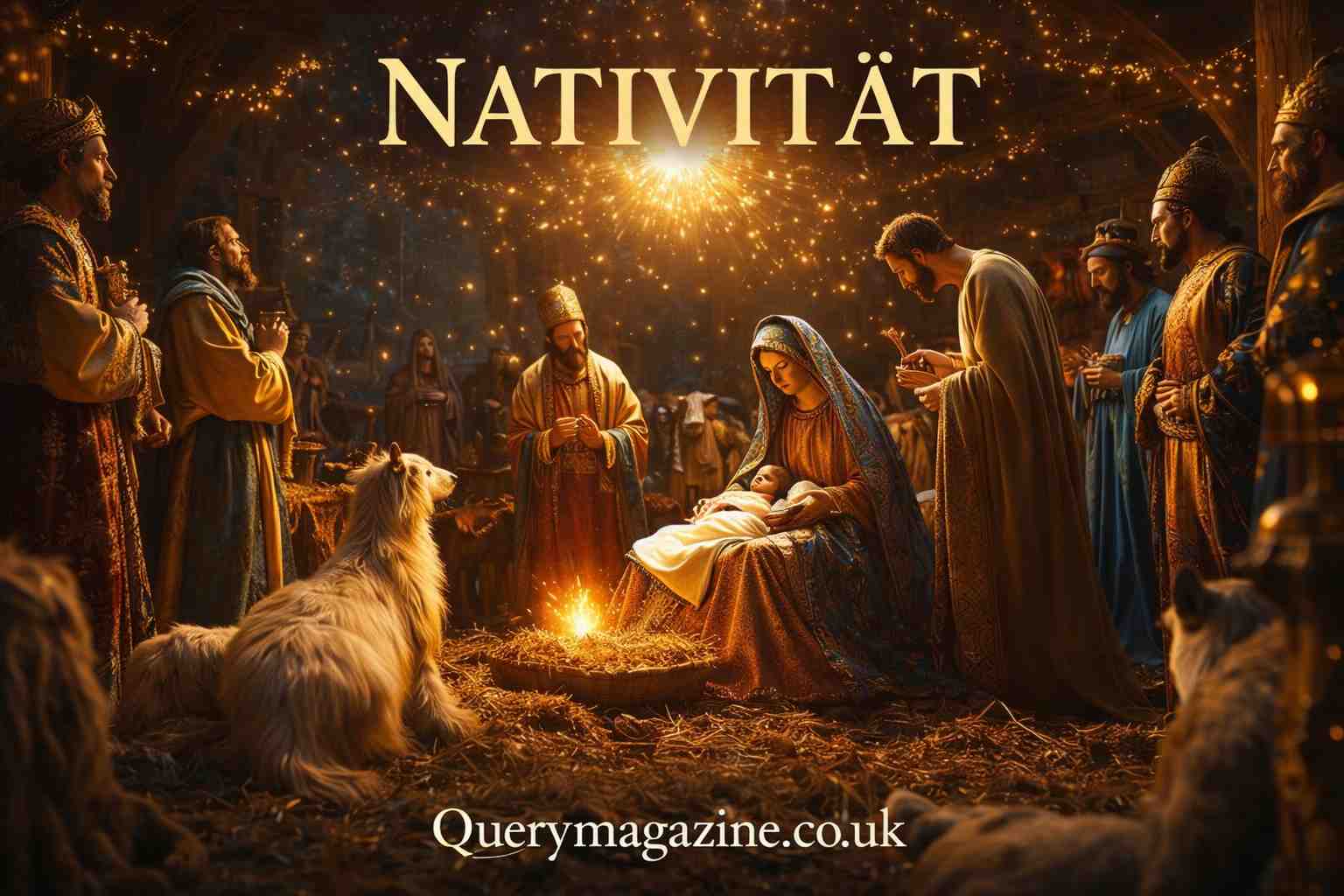
Nativität — the German word for Nativity — refers to the birth of Jesus Christ, an event that lies at the heart of Christian belief and has shaped cultural and spiritual traditions around the world for over two millennia.
More than just a narrative from ancient texts, the Nativity embodies themes of divine love, hope, humility, peace, and universal significance. In this definitive guide, we explore the theological roots, cultural interpretations, artistic legacy, and modern celebrations of Nativität — offering not just information but insight into why it remains so meaningful today.
What Is Nativität?
Definition and Meaning of the Term
The word Nativität comes from the Latin nativitas, meaning “birth.” In Christian theology, it refers specifically to the birth of Jesus Christ in Bethlehem, as recounted in the New Testament.
This event marks the moment when God became human, a foundational belief known as the Incarnation — central to the Christian understanding of salvation and divine purpose.
Origin from the Latin “Nativitas”
The term nativitas was historically used by early Christian writers to describe Jesus’ birth, and it became widely adopted in German‑speaking regions for liturgical and cultural references.
Today, Nativität and Nativity are often used interchangeably in many languages to describe the same event: the arrival of Jesus Christ into the world.
Connection to Christian Faith
For Christians, Nativität is not merely a historical event but a theological turning point and a promise of redemption. It represents God’s willingness to step into human history, bridging the gap between the divine and the earthly.
The Nativity Story According to the Bible
The story of Nativität is chronicled primarily in the Gospels of Matthew and Luke, each offering unique details that together form the classic Nativity narrative known around the world.
The Gospel of Matthew
In the Gospel of Matthew (Chapter 1–2), the focus is on Joseph’s perspective and the fulfillment of prophecy.
Joseph’s Role and the Angel’s Message
Joseph, a carpenter from Nazareth, discovers that Mary — his betrothed — is pregnant. Initially troubled, he plans to break their engagement quietly. But an angel appears to him in a dream, explaining that Mary’s pregnancy is divinely ordained and that the child will be called Jesus, meaning “God saves.”
This moment highlights obedience and trust — Joseph accepts his role in the unfolding divine plan, despite social norms and uncertainty.
The Visit of the Magi (Wise Men)
Matthew introduces the Magi — often called the Three Wise Men — who follow a bright star to find the newborn King. They bring gifts of gold, frankincense, and myrrh, each symbolizing a profound aspect of Jesus’ identity:
- Gold – royalty
- Frankincense – divinity
- Myrrh – foreshadowing suffering and death
This part of the narrative underscores that Jesus’ birth was recognized not only by humble shepherds but also by learned travelers from distant lands.
The Gospel of Luke
Luke’s account (Luke Chapter 1–2) is the most detailed and widely known version of the Nativity story.
Journey to Bethlehem and Birth in a Manger
Luke tells how Mary and Joseph traveled from Nazareth to Bethlehem due to a Roman census. When they arrived, there was no room at the inn, so Jesus was born in a stable and laid in a manger — a feeding trough for animals.
This setting emphasizes humility and simplicity, a recurring theme throughout the Nativity.
Angels Announcing the Birth to Shepherds
Luke uniquely includes the shepherds, who were among the lowliest of society at that time. An angelic choir appears, proclaiming:
“Glory to God in the highest, and on earth peace, good will toward men.”
— Luke 2:14
This declaration extends the message of Jesus’ birth not just to religious elites but to common people, reinforcing the universality of Nativität’s significance.
The Theological Importance of Nativität
The Incarnation: God Becomes Human
At the core of Nativität is the doctrine of the Incarnation — the belief that God took on human flesh in Jesus Christ. This represents a profound theological truth: God entering the human condition.
In Christian thought, this is not an ordinary birth but the moment when the divine and the human intersect permanently.
Fulfillment of Old Testament Prophecies
Christians believe that Jesus’ birth fulfilled ancient promises found in the Hebrew Scriptures, especially those predicting a Messiah from the line of King David.
Prophecies such as Isaiah 7:14 — “a virgin shall conceive” — are seen as being fulfilled in the events surrounding Jesus’ birth.
Humility and Divine Love in Jesus’ Birth
Unlike kings born in palaces, Jesus is described as arriving in a stable, lying in a manger, and being greeted by shepherds. This humble beginning speaks to the heart of Christian theology — that God chooses the lowly and ordinary to reveal divine glory.
Symbol of Hope, Peace, and Salvation
Across Christian tradition, Nativität represents:
- Hope in darkness
- Peace on earth
- Salvation for humanity
These themes have influenced centuries of liturgy, music, art, and communal life, especially during the Christmas season.
Nativity Scenes: Tradition and Meaning
Origins of Nativity Scenes (St. Francis of Assisi)
The custom of creating nativity scenes — called a Krippe in German — dates back to the early 13th century.
Saint Francis of Assisi is credited with staging the first live Nativity in 1223 in Greccio, Italy. He used real people and animals to bring the Nativity story alive for worshippers who could not read the Bible.
This tradition quickly spread across Europe and became a central expression of Christian devotion.
German Tradition: Krippe
In Germany, nativity scenes are especially prominent. Artisans craft elaborate sets featuring:
- The Holy Family (Mary, Joseph, baby Jesus)
- Angels
- Shepherds and sheep
- The Magi
- Local villages and landscapes
German Weihnachtsmärkte (Christmas markets) frequently include beautiful Krippe displays, blending folk art with religious symbolism.
Elements of a Nativity Scene
Nativity sets range from simple domestic models to grand public installations. Typical elements include:
- Manger
- Stable
- Figures of Mary, Joseph, Jesus
- Animals
- Star of Bethlehem
- Shepherds and Magi
Each figure and symbol reinforces aspects of the Nativity story and its meaning.
Nativität Across Cultures
While rooted in Christian tradition, the Nativity has been celebrated and interpreted in diverse cultural contexts across the globe.
Europe: Christmas Markets and Nativity Displays
European countries have long traditions of festive Christmas markets, where nativity scenes are a centerpiece.
In places like Austria, Italy, and Spain, towns decorate public squares with giant Nativity installations that draw families and visitors from near and far.
Latin America: Las Posadas and Processions
In Mexico and parts of Latin America, the Nativity is celebrated with Las Posadas — a nine‑night reenactment of Mary and Joseph’s search for shelter. Communities procession from house to house, ultimately gathering for celebration and prayer.
These events combine faith, community, and cultural storytelling.
Philippines: Simbang Gabi and Night Masses
In the Philippines, a tradition called Simbang Gabi involves attending nine days of Masses leading up to Christmas Eve. The word literally means “Night Mass,” and it draws people together in preparation for celebrating Jesus’ birth.
United States & Western Countries: Pageants and Community Events
In many Western countries, schools, churches, and communities stage Christmas pageants, complete with costumes, music, and dramatizations of the Nativity.
Families often set up Nativity scenes at home, and cities may feature public displays during the holiday season.
How Nativität Is Celebrated Today
While ancient in origin, Nativität remains vibrant in contemporary celebrations.
Midnight Mass and Church Services
Many Christians worldwide attend Midnight Mass on Christmas Eve — a tradition that honors the moment of Jesus’ birth.
Churches around the world read the Nativity narrative, sing carols, and reflect on the meaning of the Incarnation.
Gift‑Giving Inspired by the Magi
The custom of exchanging gifts during Christmas echoes the gifts of the Magi — gold, frankincense, and myrrh — offered to the newborn King.
This tradition symbolically celebrates generosity, love, and sharing.
Christmas Carols and Songs
Some of the most beloved Christmas carols focus directly on the Nativity story, including:
- “Silent Night”
- “O Holy Night”
- “Away in a Manger”
- “Hark! The Herald Angels Sing”
These songs have been sung for centuries and continue to be central to holiday celebrations.
Nativität in Art, Literature, and Music
Nativität has inspired countless works of art and artistic traditions.
Renaissance Paintings and Modern Art
During the Renaissance, masters like Sandro Botticelli, Giotto, and Caravaggio depicted the Nativity with profound artistic depth and emotion. Their works remain iconic representations of this sacred moment.
Modern artists and filmmakers continue to revisit the Nativity story, bringing it to new audiences and cultural contexts.
Films, Plays, and Animated Adaptations
From classic Christmas films to animated retellings, the Nativity story has been adapted into movies and performances that make the narrative accessible to all ages.
Famous Christmas Carols Inspired by the Nativity
Music has played a major role in preserving and sharing the Nativity tradition. Carols written centuries ago are still widely sung and have become staples of holiday culture.
This musical legacy reinforces the sacred message of Nativität.
Life Lessons from Nativität
Beyond theology and tradition, the Nativity offers timeless lessons:
Faith and Trust in Difficult Times
Mary and Joseph trusted in God’s plan despite uncertainty — a powerful example of faith in challenging circumstances.
Joy and Celebration of Life
The shepherds and angels represent joy that transcends fear — a message that remains relevant in times of hardship.
Humility and Simplicity
Jesus’ humble birth reminds us that greatness often begins quietly and without fanfare.
Generosity and Kindness
The Magi’s gifts symbolize a heart that gives freely — a lesson in generosity for all believers.
Being a Guiding Light for Others
The Star of Bethlehem is a symbol of guidance, inspiring many to be beacons of hope in their own communities.
Teaching Children About Nativität
Families often use the Nativity story to help children understand deeper values — not just the holiday, but life itself.
Setting Up Nativity Scenes at Home
Children can participate in arranging Nativity figures, offering a visual and hands‑on way to engage with the story.
Storytelling and Family Plays
Reading the Nativity narrative or acting it out as a small play helps children connect emotionally and intellectually with the tradition.
Nativität in the Modern World
Though deeply rooted in religion, the Nativity also resonates culturally and socially.
Cultural and Social Significance Beyond Religion
Many people — even those who do not observe religious practices — value the Nativity for its messages of hope, peace, and unity.
Commercialization of Christmas and Preserving Its Meaning
In contemporary society, Christmas has become highly commercialized, sometimes overshadowing its spiritual origins. Yet for many, the Nativity scene remains a vital reminder of the season’s true meaning.
Conclusion
Nativität — the story of Jesus’ birth — stands as one of the most enduring and beloved traditions in human history. It bridges centuries of theology, art, culture, and communal life.
Whether experienced through church services, family traditions, music, or public celebrations, the Nativity continues to speak to what matters most: love, humility, hope, and peace.
By exploring Nativität from every angle — theological, historical, artistic, and cultural — we gain not just understanding but deeper connection to a tradition that has shaped the lives of billions.
May the message of the Nativity continue to inspire faith, kindness, and hope in every generation.
ALSO READ: Piragnia Fish Explained: Meaning, Habitat, Diet, Behavior, Myths, and the Truth About Piranhas